

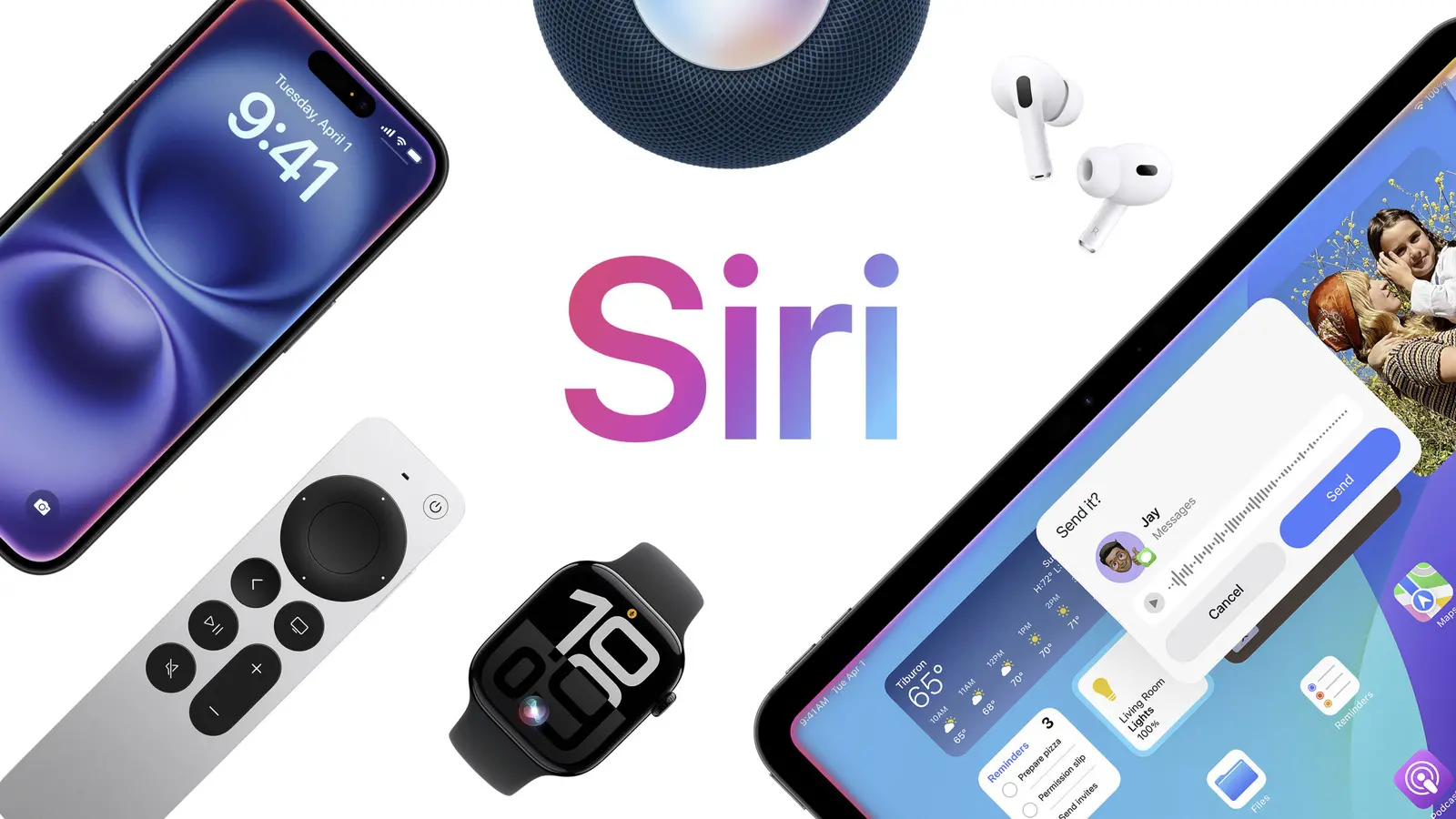
Apple has agreed to pay $250 million to settle a class action lawsuit that accused the company of misleading iPhone buyers in the United States about the timely release of a significantly upgraded, AI-powered version of Siri. The lawsuit, filed on behalf of consumers who purchased the iPhone 16 lineup and the iPhone 15 Pro, claimed that Apple’s marketing and public statements created a reasonable expectation that the new Siri would be available in 2024, alongside the broader Apple Intelligence suite. According to The Financial Times, the settlement, if approved by a judge, would provide financial relief to affected customers without requiring Apple to admit any legal fault.
The controversy began in June 2024 at Apple’s Worldwide Developers Conference (WWDC), where the company unveiled a “more personalized” and context-aware Siri as the centerpiece of its Apple Intelligence platform. The new Siri was promised to understand the user’s on-screen content, take actions within apps, and leverage on-device artificial intelligence to provide more relevant responses. It was presented as a key differentiator for the iPhone 16 series, which launched in September 2024 with the A18 chip specifically designed to handle AI workloads. Apple ran extensive advertisements showcasing Siri’s anticipated capabilities, including its ability to summarize notifications, edit photos via voice, and interact seamlessly with third-party apps.
However, despite the hype, the full-featured Siri never materialized. Instead, Apple rolled out selected components of Apple Intelligence in a staggered fashion throughout 2024 and 2025. Text editing tools, image generation features, and ChatGPT integration were gradually introduced, but the contextual Siri – the feature that could “see” what was on the screen and act on it – remained conspicuously absent. Apple did not publicly acknowledge the delay until March 2025, more than five months after the iPhone 16 launch. At that point, the company issued a brief statement explaining that the Siri upgrade required more development time and would be postponed indefinitely. In response, Apple pulled the television commercials and online ads that had prominently featured the new assistant.
The settlement targets a class of consumers who bought an iPhone 16, iPhone 16 Plus, iPhone 16 Pro, iPhone 16 Pro Max, iPhone 15 Pro, or iPhone 15 Pro Max in the United States. These buyers were led to believe that the device they purchased would support the advanced Siri functionality within a reasonable timeframe. The lead plaintiff argued that Apple’s failure to deliver the promised feature constituted a violation of consumer protection laws, as the company continued to sell the phones at premium prices partly based on the anticipated AI capabilities. The settlement fund of $250 million will be distributed among class members, though the exact amount per claimant has not yet been determined. Notably, the settlement agreement does not include an admission of liability by Apple, which maintains that it acted in good faith and that the delay was due to unforeseen technical hurdles.
This is not the first time Apple has faced legal scrutiny over unfulfilled product promises. In recent years, the company has been sued over claims that it exaggerated the durability of its devices, misled consumers about battery performance, and failed to deliver on the privacy protections advertised for its services. However, the Siri case is particularly significant because it touches on Apple’s long-stated ambition to lead in artificial intelligence. Since the launch of ChatGPT in late 2022, the tech industry has been in a race to integrate generative AI into core products. Apple’s initial move to partner with OpenAI for ChatGPT integration and later with Google for Gemini models was seen as an admission that its own AI development was lagging.
Indeed, Apple’s struggle to deliver the new Siri has been attributed to internal challenges. Reports have indicated that the company’s AI teams faced difficulties in training large language models to operate efficiently on-device within the constraints of privacy and battery life. The contextual understanding required for the new Siri – parsing a user’s screen, understanding the app’s interface, and executing commands across multiple services – proved far more complex than anticipated. Apple initially aimed to rely on a combination of on-device processing and cloud-based inference, but concerns over data security and network latency forced repeated redesigns. The partnership with Google Gemini, announced in early 2026, allowed Apple to leverage Google’s mature AI platform while continuing its own development.
Looking ahead, Apple has indicated that the new Siri, along with a suite of additional AI features, will be integrated into iOS 27, expected in late 2026 or early 2027. This timeline marks a delay of nearly three years from the original promise. In the interim, Apple has worked on incremental improvements to the existing Siri, including better voice recognition and faster responses, but the fundamental upgrade remains unshipped. The lawsuit and settlement serve as a cautionary tale for the entire tech industry, where aggressive marketing of AI features has often outpaced the actual technology. As consumers become more savvy about such claims, companies may face growing legal and reputational risks for overpromising.
Apple’s decision to settle rather than fight the lawsuit in court likely reflects a pragmatic assessment of the public relations costs and legal uncertainties. By paying $250 million, the company avoids a potentially damaging discovery process that could expose internal communications about the development timeline and marketing decisions. The settlement also allows Apple to move forward without a judicial finding of fraud or misrepresentation, preserving its reputation for integrity. Nevertheless, the episode has dented Apple’s image as a company that delivers on its promises. The delayed Siri has become a symbol of the challenges even the world’s most valuable technology firm faces in the AI era.
For affected customers, the compensation may offer some consolation, but the broader impact is a loss of trust. Many iPhone 16 buyers paid a premium for the promise of AI-enhanced features that have yet to materialize. The settlement recognizes that harm, though critics argue that $250 million is a fraction of Apple’s massive profits from the iPhone 16 series. Industry analysts note that the lawsuit could set a precedent for similar claims against other tech companies that tout AI features as selling points before they are ready. As artificial intelligence continues to permeate consumer electronics, the gap between marketing and reality is likely to remain a contentious issue.
In the end, the Siri saga underscores the difficulty of pioneering new technology at scale. Apple’s journey from WWDC 2024 to the settlement reflects the real-world complexities of artificial intelligence development – where timelines slip, demonstrations are scripted, and genuine breakthroughs take longer than hoped. Whether Apple can finally deliver the Siri it promised, and whether users will still care by the time it arrives, remains an open question. For now, the $250 million settlement closes one chapter, but the story of Apple’s AI ambitions is far from over.
Source: Engadget News