

In short: Iran’s Islamic Revolutionary Guard Corps has released a video threatening “complete and utter annihilation” of OpenAI’s $30bn Stargate AI campus in Abu Dhabi, singling out the facility by name for the first time and warning it will strike if the US proceeds with threatened attacks on Iranian civilian infrastructure.
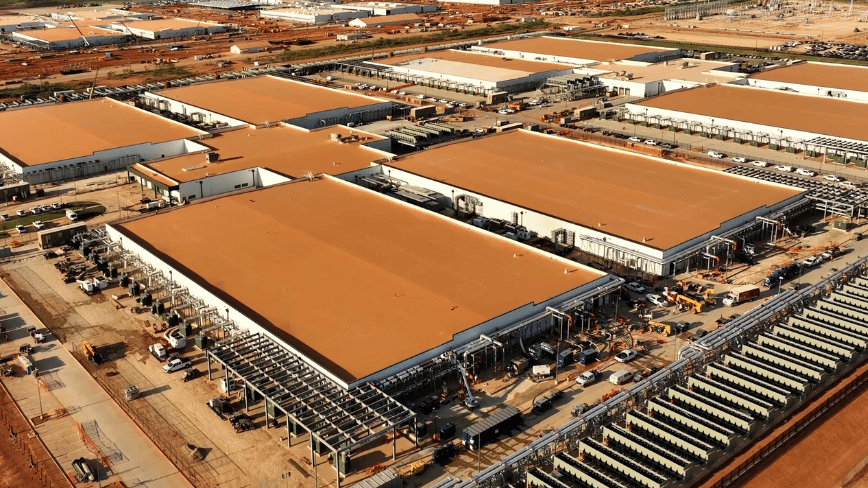
A senior officer in Iran’s Islamic Revolutionary Guard Corps has issued a stark warning regarding OpenAI’s flagship AI data centre located in Abu Dhabi, releasing a video that begins with a blurred satellite view of the site before transitioning to clear night-vision footage of the sprawling Stargate campus. An ominous message overlays the footage, stating: “Nothing stays hidden to our sight, though hidden by Google.”
This video, published on April 3, 2026, by Brigadier General Ebrahim Zolfaghari of the IRGC, marks a significant escalation in Iran's stance. Just days prior, the Guard had listed 18 US technology companies as legitimate military targets, including major names like Apple, Microsoft, Nvidia, and Tesla, but had not mentioned any specific facility. The Stargate video represents the first instance in which the IRGC has specifically named a facility for potential destruction.
Zolfaghari indicated that the threat of an attack hinges on whether the United States follows through on President Donald Trump’s threats to bomb Iranian power plants and desalination facilities. While the threat is conditional and not immediate, it follows a month of increasing military tensions: a joint US-Israel operation that commenced on February 28, 2026, has already led to Iranian retaliatory strikes against Gulf energy infrastructure, military bases, and notably, commercial data centres.
What is Stargate UAE?
Stargate UAE is the international flagship of a $500bn joint venture involving OpenAI, SoftBank, Oracle, and the Abu Dhabi sovereign investment vehicle MGX. The campus is being developed and financed by UAE artificial intelligence company G42, covering approximately 19 square kilometres of desert south of Abu Dhabi, and will be co-operated by OpenAI and Oracle. SoftBank’s involvement was partially backed by a $40bn bridge loan to support its commitment to OpenAI, arranged with major financial institutions in late 2025.
The facility’s initial phase, which includes a 200-megawatt compute cluster powered by Nvidia Grace Blackwell GB300 systems, is slated to become operational by the end of 2026. Ultimately, the campus is designed to achieve a total capacity of 1 gigawatt, with the UAE’s AI minister estimating total construction costs exceeding $30bn as of January 2026. Reports suggest the facility may house up to 500,000 Nvidia GPUs, although this number has not been independently verified. If completed as planned, Stargate UAE could represent the largest concentration of AI computing power outside the United States.
Cisco is tasked with providing zero-trust networking and connectivity infrastructure, while Oracle manages cloud operations and Nvidia is the primary chip supplier. G42 holds the construction and land interests, and OpenAI is responsible for model training and inference workloads.
A conflict that has already reached the server room
The threat to Stargate is increasingly credible, particularly in light of recent events. In the early hours of March 1, 2026, Iranian Shahed drones targeted two Amazon Web Services data centres in the UAE and damaged a third in Bahrain, causing two of the three availability zones in AWS’s ME-CENTRAL-1 region to go offline for over 24 hours. These attacks disrupted essential services across the Gulf, including banking, ride-hailing, and payment processing, prompting AWS to waive usage fees for the affected region throughout March.
On April 2, Iran claimed to have struck an Oracle data centre in Dubai, although Dubai’s media office refuted this claim the same day; the actual status of that facility remains uncertain. These AWS strikes represent the first recorded instance of a state deliberately targeting commercial data centres amid an active military campaign, amplifying the credibility of the current threats against Stargate.
The stakes for global AI infrastructure
The timing of these developments is particularly concerning for the tech industry. Analysts from TD Cowen predict that capital expenditure for hyperscalers will surpass $600bn in 2026, with approximately 75% of that related to AI infrastructure development. The Gulf region was previously set to be the fastest-growing data centre market globally, with annual growth expectations exceeding 60%, driven by large-scale projects in the UAE and Saudi Arabia.
This pipeline is now at risk. Insurers and institutional lenders are reevaluating risk models for Middle Eastern infrastructure at a time when companies like Meta are aggressively securing long-term capacity with significant investments. A successful strike on Stargate, or a sustained credible threat, could necessitate a comprehensive reevaluation of future AI compute locations, likely favoring Northern Europe, India, and Southeast Asia.
One analyst pointedly remarked, “Previously, the assumption was that if America faced challenges in building data centres, we could rely on our Middle Eastern allies. But who will insure a $20bn facility in a region vulnerable to drone attacks?”
This ongoing conflict is also intensifying long-standing discussions regarding the intertwined nature of cybersecurity and AI infrastructure as strategic concerns. Palantir’s chief technology officer has characterized the Iran conflict as the first significant war influenced by AI-assisted targeting, with advanced systems processing battlefield data to hasten strike decisions. This duality means that the same AI infrastructure that facilitates rapid military decision-making also becomes a prime military target.
As of April 6, 2026, Iran has yet to act on its specific threat, and ceasefire discussions remain stalled. Iran has declined a US proposal for a temporary cessation of hostilities, while President Trump continues to threaten Iranian civilian infrastructure. The $30bn campus in the Abu Dhabi desert, not yet operational, now stands at the crossroads of two conflicts: one kinetic, fought with drones and missiles across the Gulf; the other strategic, concerning the control of the computational resources that will drive the next decade of artificial intelligence. The future of both conflicts may hinge on decisions made in the forthcoming weeks.
Source: TNW | Amazon News