

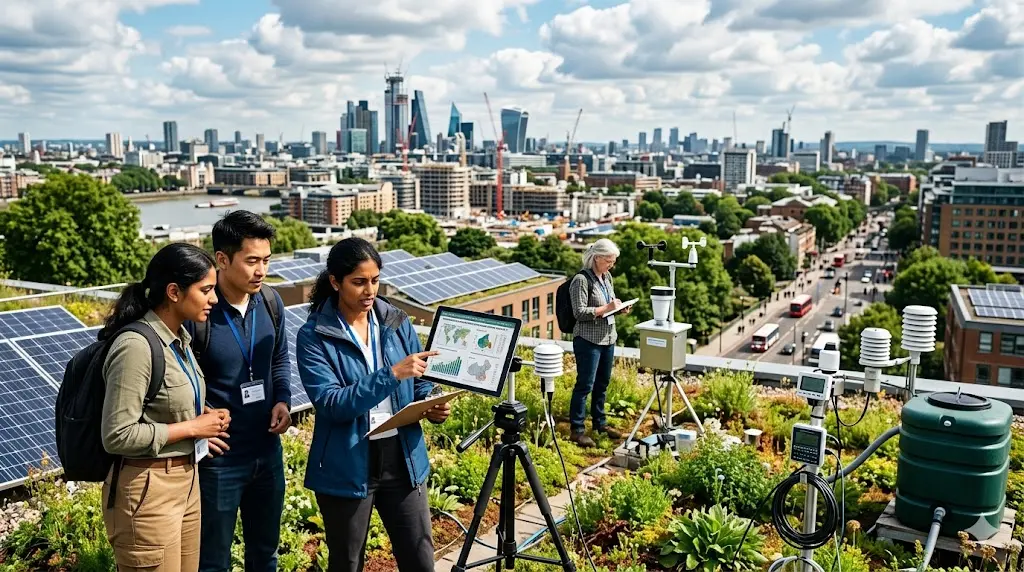
Climate change in urban development is no longer just a planning issue for governments or architects. It directly affects where people live, how cities grow, and whether urban infrastructure can survive rising temperatures, floods, and resource shortages. Recent research shows that cities adapting early are already seeing better economic resilience, healthier living conditions, and stronger long-term property value growth.
Climate change is reshaping urban development through heat-resistant infrastructure, green buildings, flood adaptation systems, renewable energy integration, and smarter land planning. Research in 2026 suggests that cities investing in climate-focused urban planning now are reducing future economic losses, improving public health, and attracting sustainable business investment.
What Is Climate Change in Urban Development?
Climate Change in Urban Development: The process of designing, expanding, and managing cities in ways that reduce environmental damage while helping communities adapt to changing climate conditions.
Urban development used to focus mostly on expansion. Bigger roads. More buildings. Faster transportation. That model is changing quickly.
Researchers now argue that cities must be built around climate resilience rather than simple growth. Rising sea levels, extreme heat, poor air quality, and unpredictable rainfall are forcing urban planners to rethink how neighborhoods function.
Here's the thing many people miss: cities produce a massive share of global carbon emissions, yet they also hold the biggest opportunity for climate recovery. Dense urban areas can actually reduce emissions when designed properly through public transport, energy-efficient buildings, and mixed-use communities.
One recent urban climate study found that green infrastructure projects lowered local heat exposure by several degrees in heavily populated districts. That matters more than most headlines suggest because urban heat waves are becoming deadlier each year.
Why Climate Change in Urban Development Matters
2026 feels different from even five years ago. Climate adaptation isn't being treated as a side project anymore. It's becoming central to city economics.
Insurance companies are adjusting property risk models. Investors are studying flood maps before funding construction. Local governments are rewriting zoning laws around climate resilience.
In my experience, the biggest shift isn't environmental. It's financial.
Cities ignoring climate adaptation are becoming expensive places to operate. Infrastructure damage, water shortages, and energy strain are increasing maintenance costs almost everywhere.
Meanwhile, climate-smart urban planning is attracting businesses that want long-term operational stability.
Research Findings Shaping Urban Development
Recent findings from climate and urban planning researchers highlight several major patterns:
Urban heat islands are intensifying faster in dense concrete-heavy areas without vegetation.
Mixed-use development reduces transportation emissions more effectively than isolated commercial districts.
Buildings designed with passive cooling systems lower electricity demand significantly during heatwaves.
Flood-adaptive architecture is becoming cheaper than post-disaster rebuilding.
Walkable neighborhoods improve both environmental outcomes and public health.
What most people overlook is that climate-focused development often improves daily life immediately. Better shade, cleaner air, lower energy bills, and less traffic congestion aren't distant future benefits. Residents notice them almost instantly.
Expert Tip
Cities investing in trees and reflective roofing systems often see measurable temperature reductions within just a few summers. Small urban design changes can produce surprisingly fast environmental results.
How to Build Climate-Resilient Urban Development Strategies
Urban planners, developers, and governments are following a more climate-focused framework now. The process isn't perfect, but several patterns are emerging consistently across successful projects.
1. Assess Climate Risk Before Construction
Older planning models focused heavily on market demand. New research suggests climate risk assessment should happen first.
Flood zones, heat exposure, water access, and infrastructure vulnerability must be analyzed before large-scale development begins.
A coastal residential project might appear profitable today but become financially unstable within a decade if sea-level projections worsen.
That's a hard truth many developers resisted at first.
2. Prioritize Green Infrastructure
Green roofs, urban forests, permeable pavements, and rain gardens are becoming standard in many climate-adaptive cities.
These systems don't just look environmentally friendly. They actively reduce stormwater pressure, cool urban temperatures, and improve air quality.
One hypothetical example makes this clearer.
Imagine two identical business districts. One relies entirely on concrete surfaces. The other integrates green corridors and reflective materials. During a summer heatwave, the greener district experiences lower cooling costs, fewer health emergencies, and better pedestrian activity.
That difference affects local business revenue more than people expect.
3. Upgrade Public Transportation Networks
Transportation emissions remain one of the biggest urban climate problems.
Research increasingly supports transit-oriented development where housing, offices, retail, and transport hubs are closely connected.
Cities reducing car dependency tend to see multiple benefits at once:
Lower emissions
Reduced congestion
Better public health
Improved local commerce
Oddly enough, some of the most successful climate-focused neighborhoods aren't futuristic at all. They're designed around older walkable city principles.
That's the counterintuitive part.
4. Design Buildings for Energy Efficiency
Modern urban development research strongly supports passive building strategies.
That includes:
Natural ventilation
Better insulation
Smart orientation for sunlight
Heat-reflective materials
Solar integration
In most cases, energy-efficient construction saves money over time despite higher upfront costs.
I've noticed that many property buyers now ask about long-term energy performance before asking about luxury features. That shift probably says a lot about where urban priorities are heading.
5. Strengthen Water Management Systems
Water resilience has become central to urban sustainability planning.
Cities are investing in:
Rainwater harvesting
Wastewater recycling
Smart drainage systems
Flood buffering zones
Without water planning, climate-resilient development simply doesn't work.
Some cities already face seasonal water shortages while simultaneously dealing with flooding during storms. Strange combination, but it's becoming more common.
Common Mistake Urban Developers Still Make
A major misconception is believing sustainability automatically means expensive mega-projects.
That's not always true.
Smaller localized interventions often outperform giant infrastructure projects because they're easier to adapt and maintain.
For example, neighborhood cooling corridors with trees and shaded pedestrian zones may improve urban heat conditions faster than large-scale technology-heavy systems.
Another mistake is focusing only on carbon reduction while ignoring adaptation.
Reducing emissions matters, obviously. But cities also need infrastructure that survives climate impacts already happening now.
Expert Tip
Urban projects that combine climate resilience with affordability tend to gain stronger public support and faster policy approval than luxury eco-developments.
Latest Research Trends in Sustainable Cities
Urban climate research is moving fast, especially around data-driven planning.
Several emerging trends stand out in 2026.
Smart Climate Monitoring
Cities increasingly use sensors to monitor:
Heat concentration
Air pollution
Water usage
Traffic emissions
This helps planners respond faster instead of waiting years for environmental reports.
Climate Migration Planning
Researchers predict more people will relocate due to environmental pressures over the next two decades.
Urban development strategies are beginning to account for population movement linked to climate conditions.
That creates both opportunity and strain for growing cities.
Nature-Based Urban Solutions
Nature-focused design is becoming more respected within engineering communities.
Wetlands, urban forests, and biodiversity zones are now viewed as practical infrastructure rather than decorative additions.
Honestly, this shift was overdue.
For years, urban greenery was treated like an aesthetic luxury instead of essential climate protection.
Circular Construction Methods
Construction waste remains a huge environmental issue.
New studies support recycled materials, modular construction, and low-carbon concrete alternatives as ways to reduce environmental impact without slowing urban growth.
What Actually Works in Climate-Smart Urban Planning
I've read plenty of overly polished sustainability reports that sound impressive but fail in practice.
What consistently works tends to be simpler.
Mixed-use communities work. Public transport works. Green spaces work. Water-efficient infrastructure works.
Cities don't necessarily need flashy experimental megaprojects to become climate-resilient.
A realistic example is retrofitting existing neighborhoods instead of constantly expanding outward. Improving insulation, planting trees, modernizing drainage, and increasing transit access often produce stronger environmental outcomes than building entirely new "smart cities."
That might not sound exciting, but practical urban adaptation usually beats futuristic marketing campaigns.
Expert Tip
Retrofitting older infrastructure is often cheaper and faster than developing entirely new climate-focused districts from scratch.
People Most Asked About Climate Change in Urban Development
How does climate change affect city planning?
Climate change affects city planning through flood risk, rising temperatures, water shortages, infrastructure stress, and public health concerns. Urban planners now integrate resilience strategies into transportation, housing, and energy systems.
Why are green buildings becoming more popular?
Green buildings reduce energy use, improve indoor comfort, and lower long-term operating costs. Many cities also offer incentives for environmentally efficient construction.
Can urban development reduce carbon emissions?
Yes. Compact development, public transportation, renewable energy systems, and energy-efficient buildings can significantly reduce urban carbon emissions.
What is climate-resilient infrastructure?
Climate-resilient infrastructure is designed to withstand environmental stress such as flooding, heatwaves, storms, and water scarcity while maintaining functionality.
Are sustainable cities more expensive to build?
Initial costs can be higher, but long-term maintenance, healthcare, and energy savings often offset those expenses. Research increasingly supports sustainability as an economic advantage.
Why are cities getting hotter?
Urban heat islands form because concrete, asphalt, and dense construction trap heat while reducing airflow and vegetation cooling effects.
How can local governments improve urban sustainability?
Governments can improve sustainability through stricter building standards, public transit investment, renewable energy incentives, and expanded green infrastructure.
Final Thoughts on Climate Change in Urban Development Latest Research Findings
Climate change in urban development is shaping how future cities will function economically, socially, and environmentally. The latest research findings suggest that climate adaptation isn't slowing urban growth. In many cases, it's improving city performance altogether.
The smartest cities in 2026 aren't necessarily the biggest or most technologically advanced. They're the ones building flexible, people-focused systems that can handle environmental pressure without collapsing under it.
And honestly, that's probably where urban development should've been heading all along.
If you need stronger online visibility for sustainability brands, urban development firms, or environmental campaigns, our network platforms including PR Wires and Rank Locally UK provide press release distribution services, digital marketing services, and local SEO services designed to improve SEO ranking, brand visibility, organic traffic, and media coverage through instant publishing and high authority backlinks trusted by agencies, startups, bloggers, and SEO professionals.