

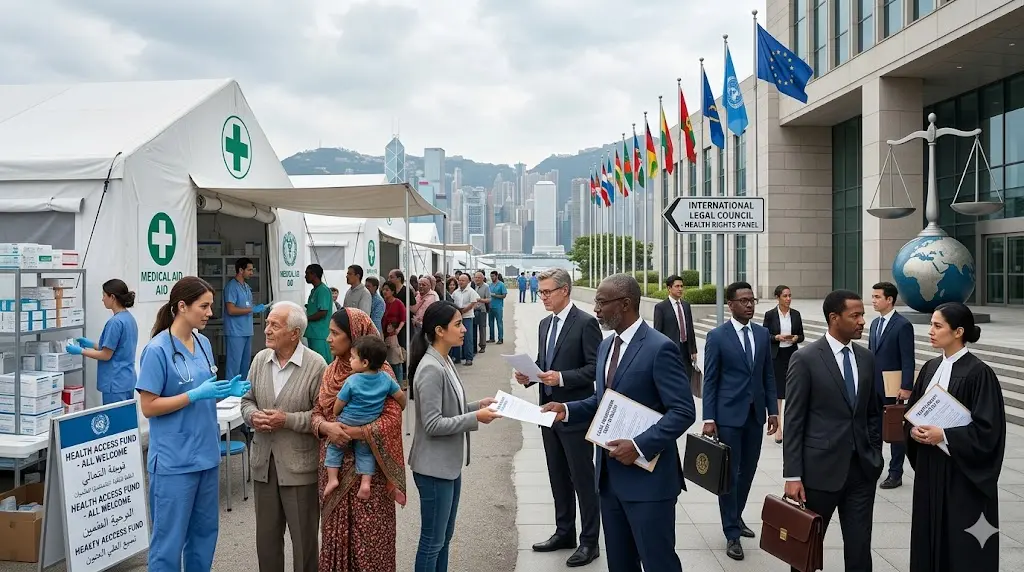
Healthcare access and international law are becoming tightly connected as countries deal with rising medical costs, migration, pandemics, and digital healthcare systems. If you’re trying to understand why some people still struggle to receive treatment despite global agreements and human rights frameworks, the answer usually comes down to enforcement, funding, and political priorities.
Here’s the thing: healthcare is no longer just a domestic issue. International law now shapes everything from vaccine access to refugee healthcare rights and cross-border medical cooperation.
Healthcare access and international law refer to the global legal principles, treaties, and policies that influence whether people can receive safe, affordable, and equal medical care. In 2026, governments are facing growing pressure to treat healthcare as a universal human right instead of a privilege tied to income or nationality.
What Is Healthcare Access and International Law?
Healthcare access means people can obtain medical treatment, preventive care, medicines, and emergency support without extreme financial or geographic barriers.
International law, in this context, includes treaties, conventions, and human rights agreements that encourage governments to protect public health and ensure fair healthcare systems across borders.
Definition Box
Healthcare Access and International Law: A global legal framework that influences how nations protect the right to healthcare, distribute medical resources, and respond to international public health challenges.
What most people overlook is that international law rarely forces countries to provide perfect healthcare systems. Instead, it creates standards and expectations. Enforcement can be messy. Some nations adopt strong public health protections, while others sign agreements but fail to apply them properly.
That gap matters more than people think.
For example, during international health emergencies, wealthier countries often secure medicines and vaccines first. Lower-income regions may wait months or even years for adequate medical support. International legal agreements attempt to reduce those inequalities, but progress tends to move slower than public demand.
Why Healthcare Became a Global Legal Issue
A few decades ago, healthcare was treated mostly as a national responsibility. Then several things changed:
International migration increased
Disease outbreaks spread faster across borders
Medical research became globalized
Telemedicine expanded internationally
Pharmaceutical supply chains connected multiple countries
Suddenly, healthcare policies in one country started affecting people elsewhere.
In my experience, this shift caught many governments off guard. Laws written for local healthcare systems now have to address global data sharing, cross-border treatment rights, and international emergency coordination. That’s a much bigger challenge than policymakers expected.
Why Healthcare Access and International Law Matter in 2026
The conversation around healthcare access feels different in 2026 because people now expect healthcare systems to handle more than basic treatment. Mental health support, digital consultations, refugee care, climate-related illness, and AI-assisted diagnosis are all part of the debate.
And honestly, some systems are struggling to keep up.
Rising Healthcare Inequality
One major issue is the widening gap between advanced healthcare systems and underfunded ones. Countries with strong economies continue investing in biotechnology and digital medicine, while poorer nations still face shortages of doctors, medicines, and hospital infrastructure.
International law tries to address this imbalance through global health agreements and humanitarian programs, but funding remains inconsistent.
A realistic example would be a refugee family crossing borders during a regional conflict. International law may technically guarantee emergency medical treatment, yet local hospitals could already be overwhelmed. Rights exist on paper, but access becomes complicated in real life.
That tension defines much of the healthcare debate right now.
Digital Healthcare Creates New Legal Questions
Telemedicine has changed healthcare access dramatically. Patients can now consult doctors in different countries through online platforms. Sounds convenient. Sometimes it is.
But here’s where things get complicated:
Which country’s laws apply?
Who protects patient data?
What happens if malpractice occurs across borders?
Can prescriptions issued internationally be enforced locally?
These legal questions are becoming more urgent every year.
Expert Tip
Countries investing in digital healthcare without updating international legal agreements will probably face major disputes over privacy, licensing, and medical accountability within the next few years.
How International Law Helps Improve Healthcare Access
International healthcare law works through agreements, organizations, and cooperative frameworks rather than a single global authority.
Here’s a simplified breakdown of how it usually works.
How to Strengthen Healthcare Access Through International Law — Step by Step
1. Establish Healthcare as a Legal Right
Governments first need constitutional or legislative recognition that healthcare is a basic human right.
Without legal recognition, public health programs often become political bargaining tools rather than protected obligations.
Several countries have already integrated healthcare rights into national law, creating stronger accountability systems.
2. Create International Health Agreements
Countries cooperate through international treaties and public health frameworks to coordinate responses during emergencies and improve healthcare standards.
These agreements often address:
Vaccine distribution
Disease reporting
Medical research cooperation
Humanitarian healthcare access
What’s interesting is that agreements usually work best before crises happen. During emergencies, governments tend to prioritize domestic needs first.
3. Invest in Healthcare Infrastructure
International law alone cannot build hospitals or train doctors. Financial investment still matters.
Many lower-income countries rely on international partnerships for:
Medical equipment
Staff training
Emergency funding
Public health education
A healthcare system with weak infrastructure cannot deliver equal access even if strong laws exist.
4. Improve Cross-Border Medical Cooperation
Patients increasingly travel for treatment, whether for affordability, specialized surgery, or emergency relocation.
Countries need clearer rules on:
Medical licensing
Insurance recognition
Patient data transfer
Emergency healthcare rights
This area will probably expand significantly over the next decade.
5. Protect Vulnerable Populations
International law places special attention on groups facing higher healthcare barriers:
Refugees
Children
Elderly populations
Rural communities
Disabled individuals
Still, protection standards vary widely between nations.
Expert Tip
The strongest healthcare systems usually combine legal protections with local healthcare investment. Laws alone rarely solve access problems.
A Common Misconception About Healthcare Rights
A lot of people assume that declaring healthcare a human right automatically guarantees equal treatment.
It doesn’t.
That’s probably the biggest misunderstanding in this space.
Legal recognition matters, but practical access depends on funding, staffing, infrastructure, and political stability. A country may technically support universal healthcare while still having severe shortages in rural regions.
I’ve seen discussions where people treat international healthcare law like a magic switch. Reality is far less neat.
Sometimes smaller policy changes — like improving transportation to hospitals or expanding telemedicine networks — produce faster results than broad legal declarations.
What Actually Works in Real Healthcare Access Reform
Let me be direct. The healthcare reforms that succeed are usually less dramatic than headlines suggest.
Governments often focus on massive healthcare promises during elections, but sustainable improvements tend to come from smaller operational changes.
Here are a few approaches that consistently help:
Localized Healthcare Expansion
Instead of building huge centralized systems immediately, some countries improve regional clinics first. That creates faster access in underserved areas.
A hypothetical example would be a rural province introducing mobile healthcare units connected to urban hospitals through telemedicine. Costs stay manageable while treatment access improves quickly.
International Medicine Partnerships
Countries partnering with global pharmaceutical manufacturers sometimes reduce medicine shortages faster than attempting total domestic production.
That approach isn’t perfect, though. Dependence on foreign suppliers creates risks during international crises.
Public Health Education
One surprisingly overlooked factor is health literacy.
People may technically have healthcare access but avoid treatment because they don’t understand preventive care, insurance systems, or available services.
That’s not just a healthcare problem. It becomes a legal and social issue too.
Expert Tip
Healthcare reform discussions often focus heavily on hospitals while ignoring transportation, internet access, and medical education. Those supporting systems matter just as much.
The Unexpected Reality About International Healthcare Law
Here’s a counterintuitive point most articles miss: stricter healthcare laws do not always improve healthcare access.
Sometimes overly rigid regulations slow down emergency responses, increase bureaucracy, or discourage medical innovation.
For example, complex international approval systems for medicines can delay treatment availability in developing regions. The legal system intends to protect patients, yet slower approvals may unintentionally reduce access.
That balance between safety and speed creates ongoing debate among policymakers.
And honestly, there’s no perfect answer.
People Most Asked About Healthcare Access and International Law
How does international law affect healthcare access?
International law influences healthcare through treaties, human rights agreements, and public health frameworks. These rules encourage governments to provide fair medical treatment and cooperate during global health emergencies.
Is healthcare considered a human right internationally?
Yes, many international agreements recognize healthcare as a human right. However, enforcement varies widely between countries, and legal recognition does not always guarantee equal access in practice.
Why do some countries still struggle with healthcare access?
Limited funding, staff shortages, weak infrastructure, political instability, and unequal resource distribution all contribute to healthcare access problems. International support helps, but local implementation remains critical.
Can refugees legally receive healthcare in other countries?
In many cases, international humanitarian standards support emergency healthcare access for refugees and displaced individuals. Actual services, though, depend on national laws and available healthcare capacity.
How is technology changing international healthcare law?
Telemedicine, digital health records, and AI-assisted healthcare are creating new legal concerns involving privacy, licensing, liability, and cross-border medical regulation.
What role do international organizations play in healthcare?
International organizations help coordinate disease response, health funding, medical research partnerships, and public health standards between countries.
Does universal healthcare solve all access problems?
Not completely. Universal healthcare systems improve affordability, but challenges like wait times, rural access, and specialist shortages may still exist.
Final Thoughts on Healthcare Access and International Law
Healthcare access and international law will probably become even more interconnected over the next decade. Public health challenges no longer stay inside national borders, and governments increasingly recognize that healthcare security affects economic stability, migration, and social trust.
From what I’ve seen, the countries making the most progress are the ones treating healthcare access as both a legal responsibility and a practical infrastructure issue. Rights matter. Funding matters too. So do staffing, transportation, education, and digital systems.
That combination — not slogans alone — is what usually improves healthcare access in real life.
If you need support with Guest Posting Services, Press Release News Submission, SEO campaigns, or local business promotion in the UK, our network platforms including Press Release Power and Rank Locally UK help businesses, agencies, startups, and SEO professionals improve brand visibility, gain high authority backlinks, increase organic traffic, and strengthen SEO ranking through instant publishing and targeted digital marketing services designed for long-term media coverage and online growth.