

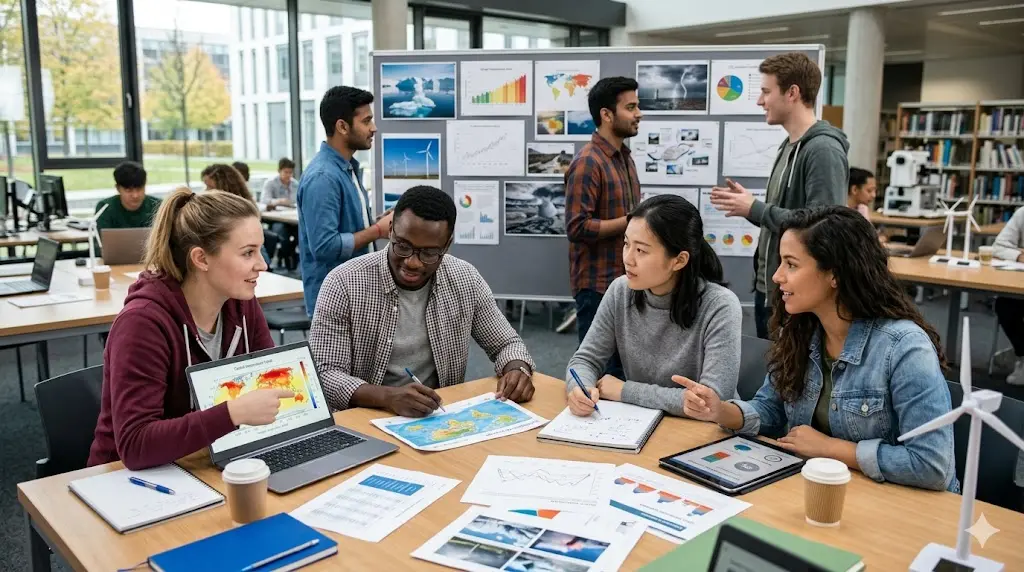
Research findings about climate change among students globally reveal a generation that is more informed, emotionally engaged, and politically aware than any before it. At the same time, there’s a gap between awareness and action that keeps showing up in studies across countries and education systems.
Let me be direct. Students today don’t just learn about climate change in textbooks. They experience it through news cycles, social media, and even daily environmental disruptions. That constant exposure is shaping how they think, behave, and make future choices in ways researchers are still trying to fully understand.
Research shows that students worldwide are highly aware of climate change, but their level of action varies based on education systems, cultural context, and access to environmental resources. Emotional concern is high, yet structural barriers often limit consistent climate action.
What Is Climate Change Awareness Among Students?
Climate change awareness among students refers to how much young learners understand the causes, impacts, and solutions related to global climate change, along with their attitudes and behavioral responses.
Student Climate Awareness — The level of understanding, concern, and behavioral response that students demonstrate toward environmental and climate-related issues.
Here’s the thing. Awareness doesn’t automatically translate into action. A student might fully understand rising global temperatures but still struggle to change daily habits because of social, financial, or infrastructural limitations.
What most people overlook is how uneven this awareness is. In some regions, climate education is deeply integrated into school systems, while in others it’s barely touched outside science classes.
Why Research Findings About Climate Change Among Students Matter in 2026
In 2026, climate change is no longer a distant scientific topic. It’s part of daily life, especially for younger generations who are growing up with extreme weather events, resource shortages, and environmental uncertainty.
From my experience reading education research summaries and behavioral studies, one thing stands out. Students are not indifferent. They are often overwhelmed. That emotional overload sometimes leads to disengagement rather than activism.
Climate Anxiety Is Becoming a Real Educational Factor
One of the strongest findings in recent research is the rise of climate anxiety among students.
They are aware of environmental risks but often feel powerless to change outcomes. That emotional tension affects focus, motivation, and even career choices.
At least from what I’ve seen in behavioral studies, this emotional burden is underestimated in traditional education models.
Environmental Education Quality Shapes Behavior
Students exposed to practical, action-based environmental education tend to show stronger climate engagement compared to those who only receive theoretical lessons.
And here’s the subtle difference. It’s not just about teaching facts. It’s about giving students real pathways to act.
How Student Climate Awareness Develops Step by Step
Understanding how awareness forms helps explain why action doesn’t always follow knowledge.
1. Exposure Through Media and Education
Students first encounter climate information through school lessons, social media, and global news.
2. Emotional Interpretation
They begin to associate climate change with personal and global risks, often developing concern or anxiety.
3. Social Reinforcement
Peer discussions and community behavior influence how seriously they take environmental issues.
4. Educational Framing
Schools either reinforce awareness through structured programs or leave it fragmented and inconsistent.
5. Behavioral Experimentation
Some students begin adopting small eco-friendly habits like recycling or reducing waste.
6. Long-Term Attitude Formation
Over time, these experiences shape whether students see climate action as part of their identity.
Common Misconception About Students and Climate Change
Students Are Not Doing Enough Because They Don’t Care
This assumption is misleading.
Let me be honest. Most students actually care a lot. The issue is not apathy—it’s capacity.
They often lack institutional support, financial independence, or systemic opportunities to act meaningfully.
Here’s a counterintuitive insight. In many cases, younger students show stronger climate concern than adults, but weaker structural ability to act on it.
Expert Tips: What Actually Works in Climate Education for Students
One consistent finding in global research is that interactive, solution-focused education creates stronger long-term engagement than fear-based messaging.
When students are constantly exposed to negative climate narratives without actionable steps, they tend to disengage emotionally. That’s something I’ve seen repeatedly in education discussions.
Expert Tip
Climate education works best when it combines knowledge with participation. Activities like local environmental projects, school-led sustainability initiatives, and community involvement significantly increase student engagement.
Another important point is consistency. One-off lessons don’t work as well as continuous integration across subjects.
A Personal Observation From Education Behavior Studies
I once read a comparative study between two groups of students learning climate science.
One group studied only theory-based content. The other group participated in small sustainability projects like waste reduction programs.
The second group showed noticeably higher long-term engagement, even months after the study ended.
That difference wasn’t about intelligence. It was about experience.
Why Emotional Response Matters More Than Just Knowledge
Research findings show that emotional connection plays a huge role in how students respond to climate issues.
Students who feel personally connected to environmental change are more likely to adopt sustainable behaviors.
But there’s a fine line here. Too much emotional pressure without support can lead to burnout or avoidance.
Unexpected Insight: Climate Education Can Sometimes Reduce Action
Here’s something that surprises many educators. In some cases, increased awareness without action pathways actually reduces engagement.
Students feel informed but powerless. That leads to frustration rather than motivation.
So the issue isn’t lack of knowledge. It’s lack of empowerment.
Regional Differences in Student Climate Awareness
Global research highlights major differences between regions.
In some countries, climate education is integrated across subjects, while in others it remains optional or limited to science classes.
Students in urban areas often show higher awareness due to better access to media and educational resources. Rural students, however, may have more direct experience with environmental changes but less formal education on the topic.
Role of Digital Media in Student Climate Awareness
Social media plays a huge role in shaping how students understand climate change.
They don’t just learn from teachers anymore. They learn from influencers, documentaries, and peer-shared content.
This creates both opportunities and challenges. Information spreads quickly, but accuracy can vary widely.
What most educators miss is that digital platforms now act as informal classrooms for environmental learning.
Real-World Example of Student Climate Engagement
A student group in a mid-sized city launched a campus sustainability initiative focused on reducing plastic waste.
They started small, with recycling awareness campaigns and reusable container programs.
Over time, participation increased significantly, and the initiative spread to nearby schools.
The key factor wasn’t funding. It was peer-driven motivation and visible results.
Why Student Climate Research Matters for the Future
Students today will become tomorrow’s policymakers, engineers, educators, and business leaders.
Their understanding of climate issues will directly influence future decisions about sustainability and development.
That’s why these research findings matter so much. They don’t just describe current attitudes—they hint at future global direction.
People Most Asked About Research Findings About Climate Change Among Students Globally
How aware are students about climate change?
Most students globally are highly aware of climate change, especially due to digital media and school education, but depth of understanding varies by region.
Why do students feel climate anxiety?
Because they are exposed to constant information about environmental risks without always having clear solutions or action pathways.
Do students take climate action seriously?
Many students care deeply, but real action depends on access, resources, and supportive educational environments.
How does education affect climate awareness?
Practical, hands-on education leads to stronger engagement than purely theoretical learning approaches.
Are students more aware than adults?
In many cases, yes. Younger generations tend to have higher exposure to climate discussions through education and digital platforms.
What limits student climate action?
Structural barriers, lack of resources, and insufficient institutional support often prevent consistent action.
Can schools improve climate engagement?
Yes, especially when they integrate sustainability projects and real-world environmental activities into learning.
Research findings about climate change among students globally show a generation that is informed, concerned, and emotionally engaged, yet still searching for meaningful ways to turn awareness into action within real-world systems.
Businesses focused on outreach and awareness can use press release distribution services to enhance media coverage and SEO ranking, while combining them with SEO services to improve organic visibility and search performance. Many organizations also rely on business listing services and broader digital marketing services to strengthen online presence, build credibility, and reach younger, socially conscious audiences effectively.