

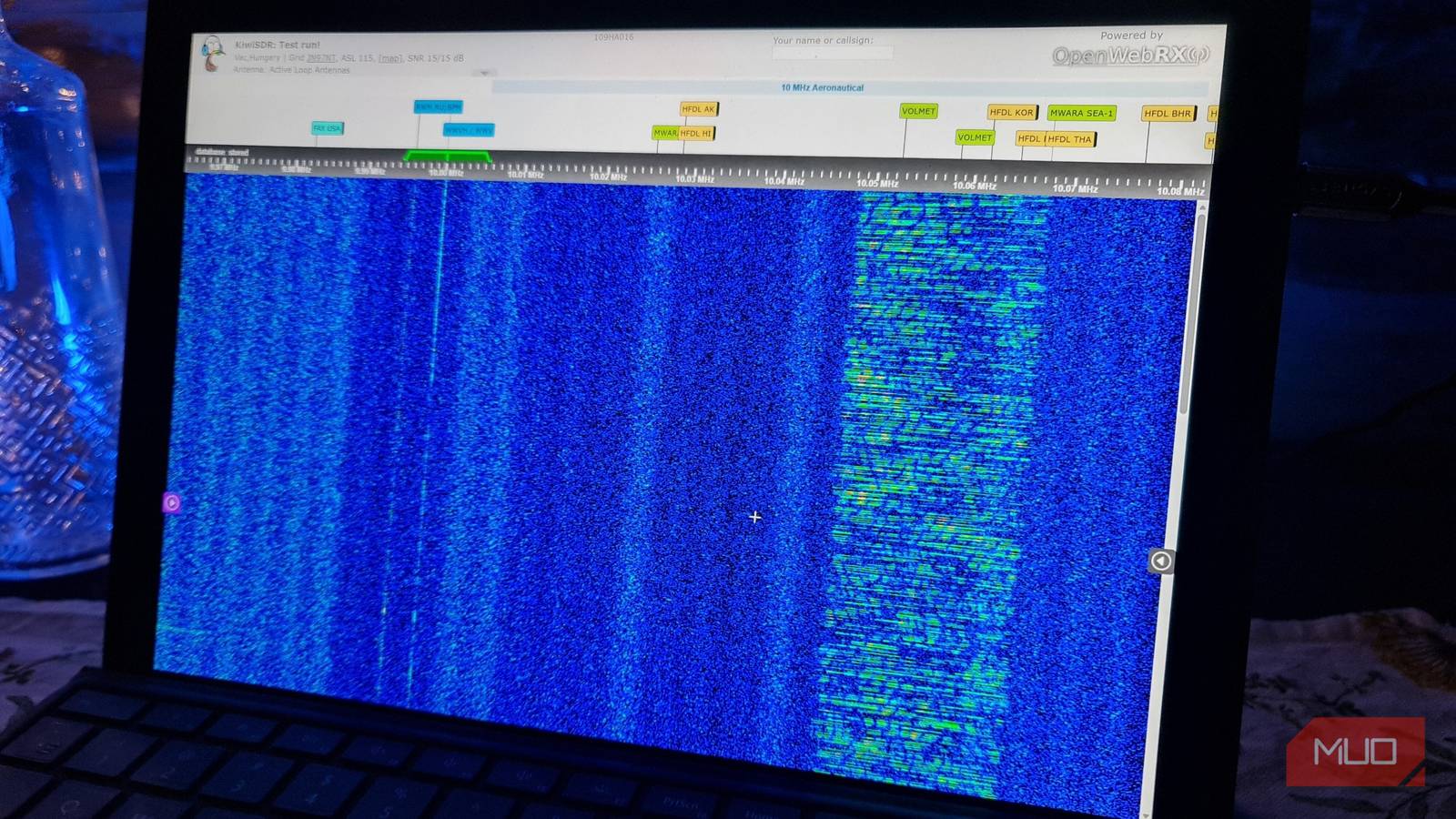
Shortwave radio has always carried a certain mystique. In an age of streaming and instant messaging, the idea of signals bouncing off the ionosphere from some unknown location can feel almost otherworldly. But the most fascinating part is that some of the strangest transmissions are still active—and you can hear them right now from your browser, using free WebSDR, KiwiSDR, or OpenWebRX receivers.
What Makes Shortwave So Creepy?
Unlike FM or local VHF/UHF stations, shortwave (the HF band, roughly 3–30 MHz) can travel thousands of miles by reflecting off the ionosphere. This means a listener in New York can pick up a signal from a transmitter deep in the Russian wilderness or a military base in Cuba. The distance, the mystery of who is transmitting, and the often monotonous, mechanical nature of the signals create an eerie atmosphere. Over the decades, radio enthusiasts have catalogued dozens of these “utility” stations, but a few stand out as genuinely unsettling.
UVB-76 – The Russian Buzzer
The most famous creepy signal is UVB-76, also known as the Buzzer. It transmits a monotonous, low-frequency buzz on 4625 kHz (upper sideband). The signal has been heard since at least the 1970s, and its origin is widely attributed to the Russian military. What makes it creepy is the sheer persistence—it rarely stops, and when it does, it sometimes switches to short voice messages in Russian, often reading names or numbers. The station has changed callsigns multiple times, and its true purpose remains classified. Some conspiracy theories link it to a “dead hand” nuclear control system, but the most likely explanation is that it serves as a channel marker or a repeater for internal communications. To hear it, use a KiwiSDR receiver located in Europe or North America, tune to 4625 kHz USB, and you’ll likely hear that dull, repetitive buzz that becomes almost hypnotic after a few minutes.
Number Stations – Voices from Nowhere
Number stations are shortwave broadcasts that transmit sequences of numbers, letters, or phonetic code words, usually read by a calm, expressionless voice. The classic assumption is that these are one-way messages to intelligence agents overseas—a spy can tune in, hear their schedule, and decode using a one-time pad. While the official purpose is unconfirmed, the sheer routine of hearing a woman’s monotone reciting “Five, nine, one, three, zero” at the same time every day is deeply unsettling.
HM01 – The Cuban Numbers Station
One of the most active number stations is HM01, often called the “Cuban” station. It transmits on several frequencies around 9–11 MHz using AM mode, mixing Spanish voice groups with bursts of digital data. The voice segments often include phrases like “Atención, atención” followed by a series of numbers. The station is believed to be operated by Cuban intelligence, and it runs like clockwork. Observing the waterfall on an SDR, you can see the digital bursts interspersed with the voice—a perfect illustration of covert communication.
E11 / Oblique – The English Voice
Another famous number station is E11, commonly known as Oblique. It uses a female voice (sometimes male, depending on the session) reading groups of five numbers in English. The schedules vary by day of the week, with frequencies like 8102 kHz and 12630 kHz on Monday–Wednesday, and different ones on other days. The station’s name comes from the phonetic “Oblique” that precedes some transmissions. The calm, almost robotic delivery gives it a cinematic creepiness—like a scene from a Cold War thriller. The Priyom.org organization maintains detailed schedules for those who want to actively track these transmissions.
Military Utility Signals – Skyking and HFGCS
Not all creepy signals are mysterious—some are just mundane military communications that sound bizarre. The US High Frequency Global Communications System (HFGCS) operates on frequencies like 11175 kHz, 8992 kHz, and 4724 kHz. While mostly silent, occasionally you’ll hear test counts, call signs, or the famous “Skyking, Skyking, do not answer” message. This phrase is used for high-priority encrypted broadcasts, often related to Emergency Action Messages (EAMs). The phrase itself has become internet legend, and hearing it crackle across the radio is a surreal experience. The “do not answer” part indicates that no one should acknowledge receipt on that frequency—a form of stealthy command.
Other Strange Signals Worth Hunting
- The Pip (5448 kHz day, 3756 kHz night): A repetitive pip sound that changes pitch, sometimes interrupted by Russian speech.
- The Squeaky Wheel (5367 kHz day, 3363.5 kHz night): A two-tone high-pitched squeak that can quickly become irritating.
- Time Signal Stations (WWV at 2.5, 5, 10, 15, 20 MHz; CHU Canada at 3330, 7850, 14670 kHz): These are less creepy but useful for practicing signal identification because they are constant and reliable.
How to Listen – No License Required
You don’t need a ham license or an expensive transceiver to explore shortwave. Websites like rx-tx.info provide a map of public WebSDR, KiwiSDR, and OpenWebRX receivers around the world. Just click a receiver, select HF, and tune to the frequencies listed. Purple icons indicate KiwiSDRs with pre-tagged interesting frequencies; green icons are OpenWebRX; blue are the university-grade WebSDRs. For best results, choose receivers that are currently in darkness (evening or night) to get better ionospheric propagation. Use upper sideband (USB) for most utility signals, AM for time stations and HM01.
The waterfall display on these SDRs shows signals as colored lines—active transmissions appear as bright bands. With a little practice, you can quickly spot an unusual signal amid the static. The Priyom.org website is an excellent resource for current schedules of number stations and other oddities.
The Allure of the Unexplained
What makes shortwave so fascinating is that we can hear these signals in real-time, but we can rarely know who is listening on the other end or why they are being sent. The Buzzer continues its endless drone; number stations recite their coded messages; military operators relay encrypted commands. The barrier between the ordinary and the hidden world of international communications is just a few kilohertz away. Every time you tune in, you’re connecting to a global network of invisible transmitters, many of which have been operating for decades with minimal explanation. Whether you’re a hobbyist or a casual explorer, the thrill of stumbling upon a strange voice or a weird pattern in the waterfall is something that never gets old. The next time you have a quiet evening, open an online SDR, and let the shortwave whisper its secrets to you.
Source: MakeUseOf News