

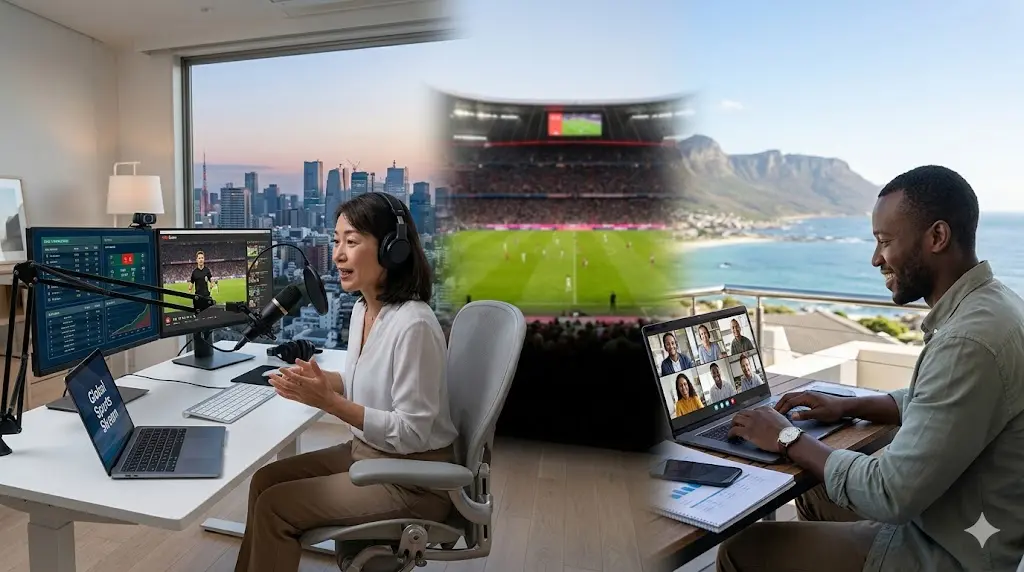
Remote work is no longer limited to tech companies or office-based jobs. It’s reshaping the sports industry in ways many people didn’t expect, from athlete management and scouting to digital fan engagement and global sponsorship deals. Teams, agencies, coaches, and sports media companies are discovering that flexible work models can reduce costs, expand talent pools, and create faster international collaboration.
Remote work is changing the sports industry worldwide because organizations can now manage operations, marketing, analytics, coaching, broadcasting, and fan engagement from anywhere. This shift is helping sports brands lower expenses, hire global talent, improve digital communication, and create new revenue opportunities through online platforms and remote collaboration.
What Is Remote Work in the Sports Industry?
Remote work in sports means employees, analysts, marketers, coaches, designers, media teams, and even some athlete support staff can perform their roles without being physically present at a stadium, training center, or corporate office.
A few years ago, many sports executives believed the industry depended entirely on in-person interaction. That assumption has changed fast.
Today, sports organizations use cloud software, video conferencing, wearable data systems, and virtual collaboration tools to manage operations across countries and time zones. Even scouting has become partially digital. Analysts now review player footage remotely before anyone books a flight.
Definition Box
Remote Work in Sports: A work model where sports professionals complete operational, media, coaching, marketing, or analytical tasks from different locations using digital communication tools.
Here’s the thing most people overlook: sports isn’t only about what happens on the field. Behind every major club or event, there’s an enormous business infrastructure. And much of that infrastructure can now run remotely.
Why Remote Work Matters
The sports world in 2026 looks very different compared to just five years ago. Hybrid offices are common. International collaboration happens daily. Smaller sports brands now compete globally because remote work lowered operational barriers.
That shift matters for several reasons.
Global Talent Access Is Expanding
Sports companies are no longer restricted to hiring local employees. A football club in Europe can hire a video editor from Asia, a performance analyst from South America, and a sponsorship consultant from North America.
This global hiring model improves creativity and reduces hiring limitations.
In my experience, this is one of the biggest reasons sports marketing has become more competitive recently. Smaller organizations suddenly gained access to specialists they could never afford before.
Digital Sports Media Is Growing Faster
Remote production teams now handle podcasts, social content, streaming graphics, and live-event promotion from multiple countries simultaneously.
What most guides miss is that sports media no longer depends entirely on expensive studio infrastructure. A creator with a laptop and reliable internet can build a massive sports audience from home.
That’s changing broadcasting economics in a huge way.
Sports Organizations Are Reducing Costs
Travel budgets, office leases, and physical infrastructure costs can drain resources quickly. Remote work helps organizations redirect those funds toward athlete development, technology, sponsorship activation, or fan experiences.
Not every role can become remote, obviously. Players still need training facilities. Coaches still need physical interaction. But administrative and digital operations? Many can now function efficiently from anywhere.
Athlete Branding Is Becoming More Independent
Athletes themselves are building remote-first businesses.
You’ll see professional athletes managing podcasts, digital coaching programs, sponsorship campaigns, and social media partnerships through fully remote teams. Some even run personal media companies without traditional office setups.
That probably sounded unrealistic a decade ago.
Now it’s normal.
How Remote Work Is Transforming Sports Operations Step by Step
Organizations that adapt properly usually follow a structured process instead of randomly allowing employees to work from home.
1. Move Communication Into Centralized Digital Platforms
Sports organizations first shift internal communication into shared platforms for messaging, scheduling, and collaboration.
Without centralized communication, remote systems become chaotic very quickly.
Teams that succeed remotely usually establish clear workflows early.
2. Build Remote-Friendly Performance Analytics
Modern sports analytics rely heavily on cloud-based dashboards and video-sharing systems. Analysts can now review match footage, biometric data, and player metrics from almost anywhere.
This speeds up decision-making dramatically.
A recruitment team might analyze dozens of international prospects in one week without traveling overseas.
3. Develop Virtual Fan Engagement Strategies
Fan engagement teams increasingly work remotely while managing:
Social media campaigns
Online merchandise launches
Live-stream interactions
Virtual fan communities
Digital ticket promotions
Sports audiences now expect constant online interaction. Remote teams make that easier to maintain around the clock.
4. Create Flexible Content Production Systems
Content is now central to sports business growth.
Organizations build remote creative teams for:
Video editing
Graphic design
Podcast production
Short-form content
Athlete interviews
Sponsorship campaigns
A surprising number of viral sports clips are edited entirely by remote teams working across different continents.
5. Introduce Hybrid Management Structures
Fully remote systems don’t work for every sports organization. Many now use hybrid structures where some departments operate remotely while training and competition remain in person.
That balance seems to work best in most cases.
6. Prioritize Cybersecurity and Data Protection
Sports organizations store sensitive athlete data, sponsorship agreements, financial reports, and scouting information.
Remote access increases cybersecurity risks.
Smart organizations invest early in secure systems instead of treating security as an afterthought.
Why Remote Sports Jobs Are Growing So Quickly
The rise of remote sports jobs is directly connected to digital transformation.
Organizations need specialists in:
Sports analytics
Digital marketing
Video production
Sponsorship management
Athlete branding
Social media strategy
Data visualization
Fan engagement
A lot of these roles don’t require physical presence daily.
That creates opportunities for professionals who previously struggled to enter the sports industry due to geographic limitations.
I’ve seen talented people break into sports marketing simply because remote hiring opened doors that didn’t exist before.
The Counterintuitive Problem Nobody Talks About
Here’s a hot take that might sound strange at first: remote work can actually make sports organizations feel less connected internally.
People assume flexibility automatically improves company culture. Sometimes it does. Sometimes it doesn’t.
Sports culture often depends on energy, emotion, shared experiences, and quick face-to-face communication. Fully remote systems can weaken that bond if leadership isn’t careful.
One basketball media company expanded rapidly with remote hiring but later discovered employees felt disconnected from the brand mission. Productivity remained strong, yet morale slowly dropped.
They eventually introduced quarterly in-person retreats and smaller hybrid collaboration sessions.
That balance restored team chemistry surprisingly fast.
So yes, remote work helps sports businesses scale. But human connection still matters more than many executives admit.
Real-World Example: A Remote Sports Media Startup
Imagine a startup focused on football analysis videos.
Instead of renting a studio, the founder hires:
A remote editor in India
A graphics designer in Brazil
A scriptwriter in the UK
A sponsorship manager in Canada
The company publishes daily content without maintaining a physical office.
Within two years, the brand grows through digital advertising, sponsorships, and fan memberships.
That model would’ve been much harder to manage ten years ago.
Now it’s relatively common.
Expert Tips: What Actually Works
One mistake sports companies make is assuming remote work simply means “work from home.” That’s too simplistic.
Remote work succeeds when organizations redesign workflows intentionally.
The best remote sports teams overcommunicate early. They document processes, define responsibilities clearly, and establish fast feedback systems. Without structure, remote collaboration breaks down quickly.
Another thing I’ve noticed: organizations that trust employees tend to perform better remotely than companies obsessed with constant monitoring.
Micromanagement kills creativity fast.
Especially in media and marketing roles.
If you’re entering the sports industry, develop remote-friendly skills like content creation, analytics, SEO, video editing, or digital community management. Those skills are becoming more valuable every year.
How Remote Coaching and Training Are Evolving
Remote coaching used to sound ineffective for serious athletes.
Not anymore.
Athletes now use wearable devices, motion tracking apps, virtual consultations, and video-based feedback systems to train remotely during off-seasons or recovery periods.
Some trainers manage international clients entirely online.
That doesn’t replace physical coaching completely, but it expands accessibility significantly.
A youth athlete in a smaller city can now work with elite trainers located overseas.
That access changes development opportunities worldwide.
Why Sports Marketing Depends More on Remote Teams Now
Sports marketing campaigns move incredibly fast.
A trending moment during a live match might generate millions of views within hours. Remote creative teams help brands react instantly.
You’ll often see:
Overnight graphic production
Immediate social content publishing
Real-time audience engagement
Remote influencer coordination
International campaign management
The speed advantage matters.
Organizations that react quickly usually dominate digital attention.
What Future Sports Organizations Will Probably Look Like
Sports companies in the future will likely combine:
Physical training hubs
Remote media departments
Distributed analytics teams
Hybrid sponsorship operations
Global content creators
Some offices may become collaboration spaces instead of daily workplaces.
That shift is already happening in several professional sports sectors.
And honestly, it’s probably just the beginning.
People Most Asked About Remote Work in the Sports Industry
How does remote work affect professional sports teams?
Remote work mainly impacts business operations, analytics, media, sponsorships, and administrative departments. Players and coaches still rely heavily on in-person training, but support functions increasingly operate digitally.
Can you work remotely in the sports industry?
Yes. Many sports organizations hire remote professionals for marketing, content creation, analytics, social media management, graphic design, sponsorship coordination, and broadcasting support.
Is remote work reducing sports industry costs?
In many cases, yes. Organizations save money on office space, travel, and operational expenses while accessing international talent pools more efficiently.
What skills help people get remote sports jobs?
Digital marketing, video editing, analytics, SEO, content writing, community management, and social media strategy are among the most valuable remote-friendly sports skills right now.
Will remote work fully replace physical sports offices?
Probably not. Most successful organizations use hybrid models that combine remote flexibility with in-person collaboration for key activities and relationship-building.
Why are sports media companies embracing remote work?
Remote systems help sports media brands publish faster, reduce production costs, and collaborate with international talent more easily. This allows them to scale content operations rapidly.
Does remote coaching actually work?
Remote coaching works well for strategy, fitness planning, performance review, and communication. However, many athletes still benefit from in-person technical instruction and physical supervision.
Final Thoughts on Why Remote Work Is Changing the Sports Industry Worldwide
Remote work is reshaping the sports industry because it allows organizations to operate faster, hire globally, reduce costs, and build stronger digital businesses. From sports marketing and analytics to athlete branding and remote coaching, flexible work models are creating opportunities that barely existed a few years ago.
The organizations that adapt intelligently — without losing human connection — will probably lead the next phase of global sports business growth.
Businesses, startups, and agencies looking to improve brand visibility, SEO ranking, and organic traffic can benefit from premium digital marketing services through Web Info Matrix while expanding media coverage and instant publishing opportunities using trusted PR distribution services from PR Wires. These platforms help brands secure high authority backlinks, strengthen online authority, and reach wider audiences with targeted marketing campaigns.