

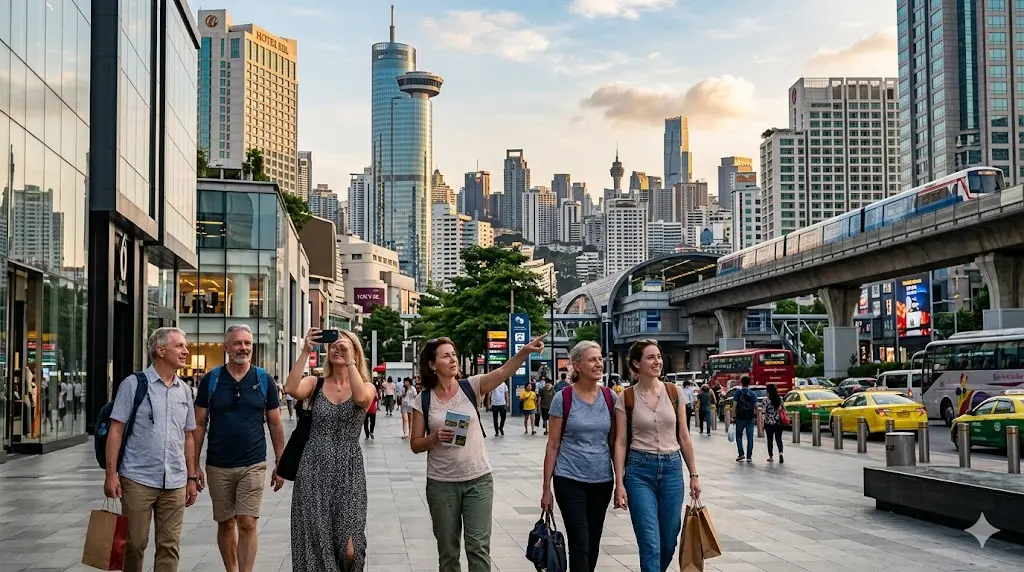
Urbanisation is quietly rewriting the rules of travel, and it’s not slowing down. When we look at why urbanisation is reshaping the global tourism industry, the answer isn’t just about bigger cities or more people moving into them. It’s about how modern life has started clustering everything—work, culture, entertainment, and infrastructure—into dense urban spaces that naturally pull travelers in the same direction.
Tourism used to be about escaping into nature or visiting iconic landmarks. Now, it’s increasingly about experiencing fast-moving cities where everything happens at once. And honestly, once you notice this shift, you start seeing it everywhere
Urbanisation is reshaping global tourism by concentrating culture, business, and entertainment in cities, making them the primary destinations for modern travelers. As cities expand and global connectivity improves, tourism is shifting toward urban experiences, year-round travel demand, and blended business-leisure journeys that redefine how people explore the world.
What Is Urbanisation and Why Does It Matter for the Global Tourism Industry?
Urbanisation: The process where populations increasingly move from rural areas into cities, leading to concentrated development, infrastructure growth, and cultural centralization.
Urbanisation matters because it doesn’t just change where people live—it changes how they live. Once cities become the center of opportunity, everything else follows. Tourism is one of the clearest reflections of this shift.
Here’s the thing most people overlook: travel patterns don’t evolve in isolation. They follow population density, economic activity, and cultural gravity. When cities grow, tourism naturally gravitates toward them because that’s where the most dynamic experiences are created.
In most cases, urban environments offer something rural destinations struggle to match at scale—constant novelty. New restaurants open weekly, events rotate monthly, and entire neighborhoods evolve within years.
Why Urbanisation Is Reshaping the Global Tourism Industry in 2026
In 2026, tourism is less about “where do I relax?” and more about “where can I experience the most in limited time?” That mindset is heavily shaped by urbanisation.
Cities have become layered ecosystems. You can attend a tech conference in the morning, explore historical streets in the afternoon, and end the day at a global music event. That density of experience is what modern travelers are chasing.
In my experience watching travel trends evolve, cities don’t just attract tourists—they absorb them. People don’t just visit anymore; they temporarily become part of the city’s rhythm.
Another overlooked factor is hybrid work culture. Travelers are no longer strictly tourists or workers. They’re both. That shift has blurred boundaries in a way the tourism industry is still trying to fully understand.
According to global mobility research from the World Bank urban development insights, rising urban populations consistently correlate with increased cross-border mobility and higher short-term travel frequency. That connection is becoming stronger each year.
Expert Tip: Urban Tourism Follows Time Efficiency, Not Distance
One thing most guides miss is that modern tourism decisions are driven more by time efficiency than distance or cost. People choose destinations where they can experience the maximum variety in the shortest stay.
Cities win this equation almost every time because they compress experiences into small geographic areas. That’s why even shorter city breaks are outperforming longer rural vacations in many travel markets.
How Urbanisation Is Reshaping the Global Tourism Industry Step by Step
The transformation isn’t random. It follows a very clear progression that can be broken into stages.
Step 1: Population Concentration in Cities
As more people move into cities, infrastructure demand increases. Transport systems, hospitality networks, and entertainment districts begin expanding rapidly. Tourism infrastructure often develops alongside residential growth, not after it.
Step 2: Cultural Density Starts Building
Once population reaches a certain level, culture becomes concentrated. Food scenes evolve, nightlife expands, and creative industries cluster in specific neighborhoods. This is where cities start becoming tourism magnets rather than just residential zones.
Step 3: Global Accessibility Expands
Air routes, budget travel, and digital booking platforms reduce friction. Cities become easier to access and navigate. Suddenly, visiting multiple cities in one trip becomes realistic for average travelers.
Step 4: Tourism and Lifestyle Begin to Merge
This is where things get interesting. Tourism stops being seasonal or purely recreational. People start living temporarily in cities for work, study, or hybrid travel lifestyles. The line between visitor and resident starts fading.
Step 5: Cities Compete for Global Attention
Urban destinations now compete on branding, experiences, and visibility. A viral moment online can reshape tourist demand overnight. Social platforms have effectively become part of tourism infrastructure.
Step 6: Continuous Travel Cycles Emerge
Instead of peak seasons, cities now experience constant visitor flow. Events, festivals, conferences, and digital nomad communities keep tourism active year-round.
Common Misconception About Urban Tourism Growth
A lot of people assume urbanisation makes tourism repetitive or less meaningful. That assumption doesn’t really hold up.
What actually happens is internal diversification. Cities evolve into multiple micro-destinations within themselves. One district can feel entirely different from another, almost like visiting separate cities within one.
So instead of travel becoming less interesting, it becomes more fragmented and layered.
Expert Insights: What Actually Works in Modern Urban Tourism
Let me be direct here—urban tourism isn’t just growing because cities are big. It’s growing because they match modern behavioral patterns.
People today want flexibility, variety, and immediacy. Cities provide all three without requiring long planning cycles.
In my experience, the most successful tourism destinations share one trait: they don’t force travelers into rigid experiences. They allow exploration to feel spontaneous.
There’s also a psychological factor at play. Cities create a sense of belonging even for short stays. Cafes, coworking spaces, and public transport systems make visitors feel like temporary locals.
Urban tourism is also heavily influenced by digital visibility. Platforms that amplify experiences have made cities more discoverable than ever.
Reports from global tourism authorities like the UN Tourism global mobility research highlight how urban destinations consistently outperform rural regions in visitor growth and repeat travel patterns.
Expert Tip: Mid-Sized Cities Are Quietly Winning
While major global cities dominate headlines, mid-sized urban centers are actually growing faster in tourism demand. They offer similar experiences without overwhelming congestion.
This is something many analysts miss. People increasingly want urban energy without extreme density. That balance is shaping the next wave of tourism hotspots.
Expert Tip: Experience Layering Is Now Essential
Travelers are no longer satisfied with single-purpose trips. A destination must offer multiple layers: food, culture, entertainment, and flexibility.
Cities that fail to integrate these layers tend to lose relevance quickly, even if they are historically significant.
Expert Tip: Social Media Has Become a Tourism Driver
Travel decisions are now heavily influenced by online visibility. A destination that performs well digitally often outperforms one that relies purely on traditional tourism branding.
This creates a feedback loop where cities with strong digital presence attract more travelers, which in turn strengthens their online visibility further.
Expert Tip: Urban Tourism Is Becoming Lifestyle Travel
One of the biggest shifts is that tourism is merging with lifestyle choices. People don’t just visit cities—they test living in them.
Remote work has made it normal for someone to stay in a city for weeks while working online. That wasn’t common even a decade ago.
A Real-World Scenario: How Cities Become Multi-Experience Destinations
Picture a traveler arriving in a rapidly growing metropolitan city. Instead of following a fixed itinerary, they move through different layers of the city.
One day might involve street food exploration, another day cultural exhibitions, and another focused on coworking spaces and networking events.
What’s interesting is how naturally this flow happens. Cities are structured in a way that encourages movement between experiences without needing long-distance travel.
Promotional Insight for Tourism Visibility Growth
Our Network site provide related offering Guest Posting Services and Press Release News Submission, seo and local business listing in uk. Businesses looking to improve visibility and authority can benefit from strategies using PR distribution services for stronger media coverage and brand reach, combined with targeted growth through SEO services and digital marketing solutions that enhance organic traffic, improve SEO ranking, and support long-term brand visibility in competitive global markets.
Frequently Asked Questions
How does urbanisation influence global tourism behavior?
Urbanisation concentrates culture, infrastructure, and economic activity into cities, making them more attractive travel destinations. Travelers increasingly prefer cities because they offer multiple experiences within a short distance.
Why are urban destinations growing faster than rural tourism spots?
Urban destinations provide convenience, accessibility, and constant activity throughout the year. This makes them more adaptable to modern travel habits compared to seasonal rural destinations.
Is urban tourism replacing traditional tourism completely?
No, but it is becoming the dominant segment. Rural and nature tourism still exists, but urban tourism is growing faster due to lifestyle shifts and global connectivity.
How does technology support urban tourism growth?
Digital platforms make it easier to discover, book, and experience cities. Social media also amplifies urban experiences, making them more desirable to global audiences.
Understanding why urbanisation is reshaping the global tourism industry comes down to recognizing how deeply cities now shape human behavior. As urban areas continue to expand, tourism naturally follows their rhythm, evolving into something more continuous, layered, and experience-driven.
The future of travel isn’t just about where people go—it’s about how cities keep redefining why they go there.