

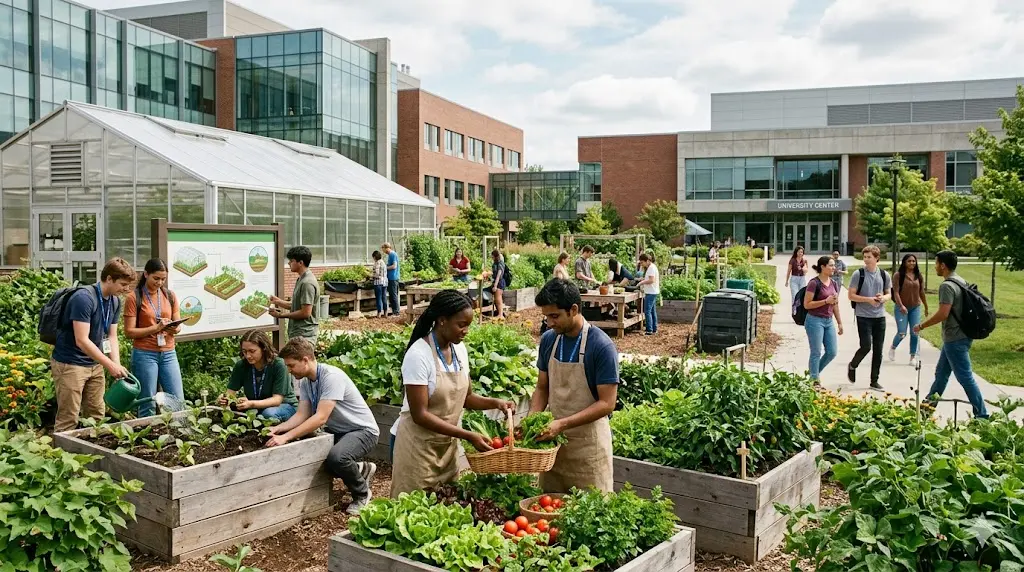
Food security is transforming higher education worldwide because universities are realizing students can’t perform academically when they’re struggling to access stable, nutritious meals. Rising living costs, global supply chain disruptions, and economic inequality are pushing colleges to rethink student support systems, campus policies, and even curriculum design.
Why Food Security Is Transforming Higher Education Worldwide comes down to one simple reality: hungry students struggle to succeed. Universities across the globe are expanding meal programs, campus food banks, sustainability projects, and nutrition-focused policies to improve student performance, retention, and mental wellbeing in 2026 and beyond.
What Is Food Security and Why Does It Matter in Higher Education?
Definition Box
Food security: Reliable access to enough affordable and nutritious food for a healthy and active life.
Food security used to be discussed mostly in humanitarian or agricultural circles. Now universities are talking about it constantly. That shift says a lot.
Students worldwide are dealing with rising rent, inflation, tuition costs, and unstable part-time employment. Food often becomes the first thing sacrificed when budgets tighten. I’ve seen students skip meals during exam weeks just to stretch their finances a few more days. That’s not rare anymore.
Here’s the thing most people overlook: food insecurity doesn’t just affect physical health. It changes concentration, memory, attendance, emotional stability, and long-term academic confidence.
Research connected to student wellbeing initiatives, campus nutrition programs, and global education trends shows a growing link between food access and graduation rates.
Universities Are Becoming Support Systems
Higher education institutions are no longer functioning only as educational centers. Many now operate like broader support ecosystems.
Some campuses provide:
Emergency meal assistance
Community kitchens
Student grocery vouchers
Free breakfast programs
Urban farming projects
A few years ago, universities rarely discussed hunger publicly. Today, many institutions openly acknowledge student food insecurity as a serious educational barrier.
That’s a massive cultural change.
Expert Tip
Students facing food insecurity often wait too long before asking for help. Universities with support systems usually see better outcomes when students access resources early rather than during academic crisis periods.
Why Food Security Is Transforming Higher Education Worldwide in 2026
The year 2026 is shaping up to be a turning point because universities are under pressure from multiple directions at once.
Economic uncertainty continues affecting families globally. Housing costs remain high in many student cities. Meanwhile, climate-related disruptions are influencing food prices and supply chains in ways students directly feel.
Higher education leaders are starting to understand something pretty uncomfortable: academic support means very little if students cannot consistently afford basic nutrition.
Rising Costs Are Reshaping Student Life
Students today spend far more on essentials than previous generations in many countries. Tuition matters, obviously. But food costs now play a surprisingly large role in student retention.
Some students quietly reduce meal frequency to afford textbooks or transportation. Others work excessive hours, which hurts study performance.
Let me be direct. A student attending lectures while exhausted and undernourished is already operating at a disadvantage before class even begins.
Global Research Is Influencing Policy
Research findings across North America, Europe, Asia, and Australia increasingly connect food insecurity with:
Lower academic performance
Increased stress levels
Higher dropout risk
Reduced classroom participation
Poorer mental health outcomes
Universities are reacting because these issues directly affect graduation metrics and institutional reputation.
What’s interesting is that food security is now becoming part of broader discussions around educational equity and social mobility.
Sustainability and Food Systems Are Entering Classrooms
Another unexpected shift? Food security is influencing what students actually study.
Programs connected to sustainable agriculture, climate resilience, food systems management, and urban farming are growing rapidly. Universities realize future graduates may need practical knowledge about food sustainability alongside traditional academic skills.
That probably would’ve sounded niche ten years ago. Not anymore.
How Are Universities Addressing Food Security? Step-by-Step
Universities are experimenting with different solutions depending on local needs, funding, and student demographics.
Some approaches work better than others.
1. Expanding Campus Food Assistance Programs
Many universities now operate food pantries or meal-sharing systems directly on campus.
Students can access:
Free groceries
Prepared meals
Emergency food packages
Subsidized cafeteria options
These systems reduce stigma when designed thoughtfully.
One university created a student grocery program that looked like a normal campus market instead of a charity service. Participation increased almost immediately because students felt more comfortable using it.
2. Building Partnerships With Local Communities
Universities increasingly collaborate with farms, nonprofit organizations, and local suppliers to support affordable food access.
This helps institutions reduce costs while strengthening regional food systems.
In some cities, community-supported agriculture programs now deliver produce boxes directly to campuses weekly.
3. Integrating Nutrition Into Student Wellness Programs
Food insecurity discussions are becoming connected with mental health and academic counseling services.
That makes sense.
Students rarely experience financial stress, food anxiety, and academic pressure separately. These problems overlap constantly.
4. Investing in Sustainable Campus Agriculture
Some universities are developing rooftop gardens, hydroponic systems, and student-led farming initiatives.
Besides improving food access, these projects create hands-on learning opportunities connected to environmental sustainability and climate adaptation.
Students often gain practical skills while helping supply campus dining systems.
5. Using Data to Identify At-Risk Students
Here’s a more controversial trend.
Some institutions now use anonymous surveys and predictive analytics to identify students who may face food insecurity risks before academic decline becomes severe.
That approach raises privacy concerns in certain cases, but supporters argue early intervention prevents long-term educational disruption.
Expert Tip
Universities that combine food assistance with financial counseling usually see stronger long-term student stability than campuses offering emergency food support alone.
Common Misconception About Student Hunger
Food Insecurity Only Affects Low-Income Students
This misconception causes a lot of damage.
Food insecurity affects students from surprisingly diverse backgrounds. Some students appear financially stable externally while quietly struggling with rising costs, family emergencies, or inconsistent income.
International students are particularly vulnerable sometimes because visa restrictions can limit employment opportunities.
I think many universities underestimated this issue for years because struggling students often hide financial stress extremely well.
Pride plays a role too.
Students may avoid asking for support because they fear judgment or embarrassment.
How Food Security Impacts Academic Performance
Nutrition and learning are deeply connected. Honestly, the relationship is probably stronger than many policymakers realized initially.
Students experiencing food insecurity often report:
Reduced concentration
Increased fatigue
Difficulty retaining information
Higher anxiety
Lower motivation
What most guides miss is how unpredictable food access creates constant mental distraction. Students aren’t just hungry. They’re mentally preoccupied with budgeting, planning meals, and managing uncertainty.
That cognitive load matters.
Mini Case Study: Engineering Student Balancing Work and Meals
An engineering student worked night shifts at a delivery job while attending university full-time. To save money, he frequently skipped breakfast and limited meals during exam periods.
His grades dropped steadily despite strong technical ability.
After receiving access to a campus meal support program and reducing work hours slightly, academic performance improved within a semester.
The interesting part? His study habits barely changed. Nutritional stability did.
Why Food Security Is Becoming a Global Education Strategy
Governments and educational institutions increasingly see food security as part of long-term economic planning.
Healthy students generally become more productive graduates. Countries investing in higher education outcomes recognize that student wellbeing directly affects workforce readiness.
This is where things get bigger than universities alone.
Food security now intersects with:
Economic development
Public health policy
Climate adaptation
Workforce productivity
Social equality
Higher education systems are becoming testing grounds for broader social support strategies.
Climate Change Is Accelerating the Conversation
Climate-related crop disruptions and rising food costs are influencing educational planning more than many people realize.
Universities preparing students for future economies understand food systems may become increasingly unstable in certain regions.
As a result, institutions are introducing courses connected to:
Sustainable agriculture
Food logistics
Resource management
Environmental policy
Alternative food technologies
Students entering these programs often see food security not just as a humanitarian issue but as an economic and geopolitical challenge too.
Expert Tips and What Actually Works
A lot of universities launch food programs with good intentions but weak long-term planning.
Here’s what actually seems effective from what I’ve seen.
Reduce Stigma First
Students avoid support systems that feel publicly embarrassing.
Programs integrated naturally into campus life generally attract more participation and produce better outcomes.
Combine Emergency Help With Long-Term Planning
Giving students temporary food aid matters, but financial literacy and budgeting support often create more lasting stability.
Short-term relief alone doesn’t solve systemic pressure.
Involve Students Directly
Some of the best campus food initiatives are student-led. Students usually understand barriers other administrators miss entirely.
One university redesigned cafeteria hours after students explained late-night workers couldn’t access meals during normal schedules.
Simple adjustment. Huge difference.
Expert Tip
Universities should measure food insecurity as seriously as academic performance metrics. Institutions that ignore student basic needs often see hidden long-term retention problems later.
People Most Asked About Why Food Security Is Transforming Higher Education Worldwide
Why is food security becoming important in universities?
Food security affects academic performance, mental health, and graduation rates. Universities now recognize that students need stable nutrition to succeed academically.
How does food insecurity impact students?
Students facing food insecurity often experience stress, fatigue, concentration problems, and lower academic confidence. Long-term insecurity may increase dropout risk.
What are universities doing to improve food security?
Many universities provide food banks, subsidized meals, emergency assistance, community gardens, and nutrition support programs to help students access affordable food.
Is food insecurity a global higher education problem?
Yes. Rising living costs and economic pressure affect students across many countries, making food insecurity a growing international education concern.
Can food security improve graduation rates?
In many cases, yes. Students with reliable access to food generally perform better academically and remain enrolled longer.
Why are sustainability programs connected to food security?
Food production, climate change, and resource management are closely linked. Universities increasingly teach sustainable food systems as part of future workforce preparation.
Do international students face food insecurity?
Sometimes they do. Visa restrictions, high living costs, and limited local support networks can make food access difficult for international students.
Final Thoughts on Why Food Security Is Transforming Higher Education Worldwide
Why Food Security Is Transforming Higher Education Worldwide comes down to a basic but powerful truth: students learn better when their essential needs are met. Universities are beginning to understand that food access isn’t separate from education quality. It’s directly connected to it.
As higher education evolves through 2026, food security will probably become a permanent part of student success planning, sustainability discussions, and institutional policy worldwide. Schools that adapt early may create healthier, more stable, and more successful student communities over time.
If your business, startup, or agency wants stronger brand visibility, organic traffic, and high authority backlinks through trusted press release distribution services and digital marketing services, platforms like PR Wires and Rank Locally UK help brands improve SEO ranking, media coverage, and instant publishing through professional newswire services and local SEO services designed for long-term online growth.