

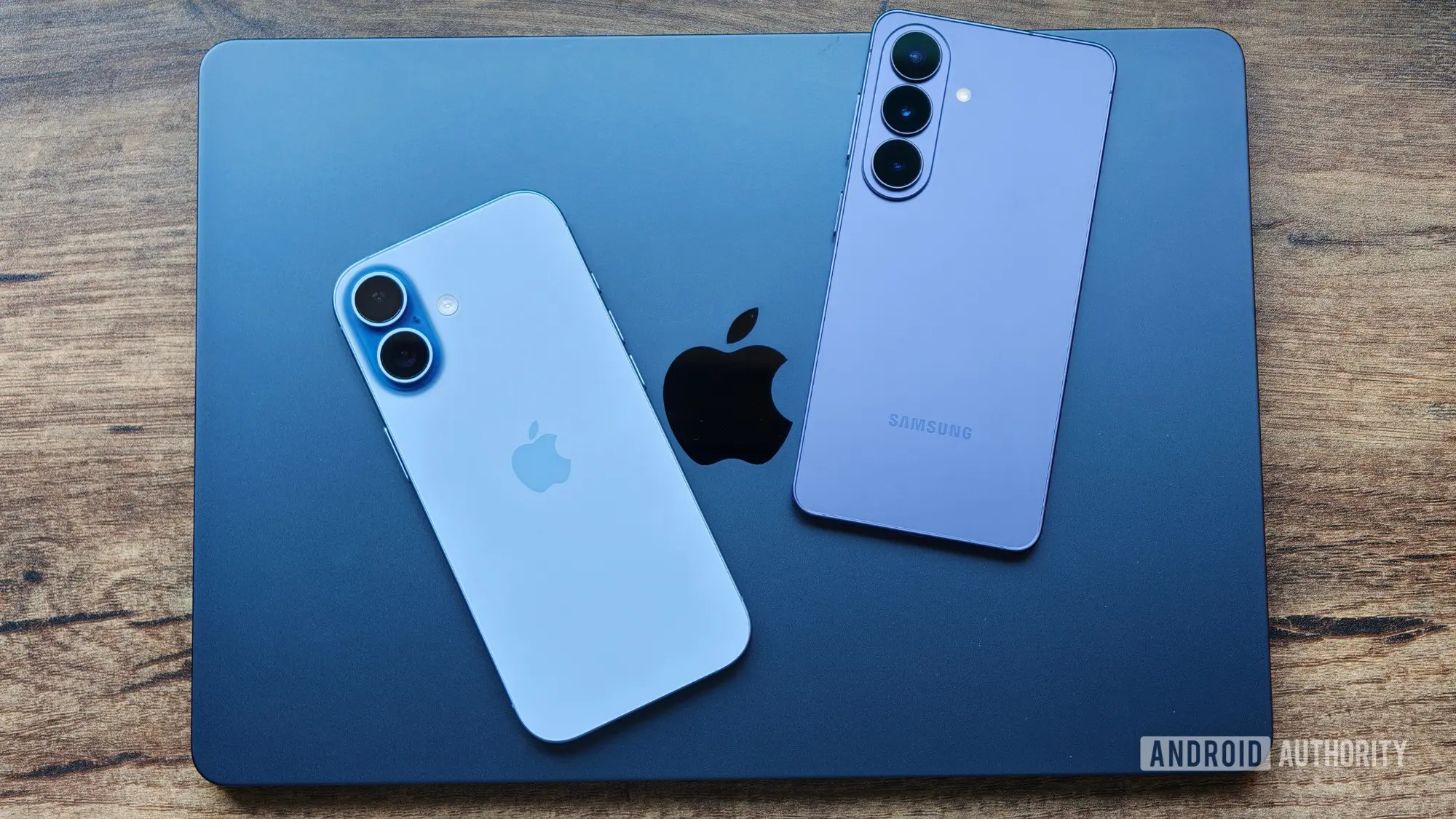
Apple is performing remarkably well in the US smartphone market, even as overall sales decline. According to a new report from Counterpoint Research, total US smartphone sales dropped 5.7% year-over-year in the first quarter of 2026. Yet Apple managed to grow its iPhone shipments by 1.3% during the same period. This contrast highlights a growing divide between Apple and Android manufacturers, with Android sales falling a steep 14.4% year-over-year.
The first quarter typically sees a battle between Apple's aging iPhone models and Samsung's new flagship launches. But this year, the dynamics shifted. Samsung postponed the Galaxy S26 series launch to mid-March, leaving a six-week gap without a premium Android contender. Consumers looking for high-end devices naturally turned to iPhones, especially the iPhone 17 lineup, which had been on the market since fall 2025.
The State of the US Smartphone Market
The US smartphone market has been facing headwinds for several quarters. Rising device prices, longer upgrade cycles, and economic uncertainty have dampened consumer demand. In Q1 2026, the market contracted by 5.7% compared to the same period in 2025. This follows a similar trend in 2025, where the market saw only modest growth. The decline is particularly pronounced in the premium segment, where flagship devices often exceed $1,000. However, Apple's ability to grow sales amid this slump suggests a strong brand loyalty and effective promotional strategies.
Counterpoint Research attributed Apple's resilience to several factors. First, the company has maintained stable pricing for entry-level models like the iPhone 17e, while doubling the base storage to 256GB without increasing the price. This move effectively offers more value for the same cost. Second, Apple has aggressively pushed promotions through carrier partners, offering trade-in deals and installment plans that lower the upfront cost for consumers. In contrast, Android manufacturers have struggled with rising component costs, making it harder to offer similar discounts.
Samsung's Delayed Galaxy S26 Launch
Samsung's decision to delay the Galaxy S26 launch to mid-March proved pivotal. In previous years, the Galaxy S-series debuted in February, giving Samsung a head start in the premium market. This year, the absence of a new flagship from Samsung in January and February allowed Apple to capture high-end buyers. The Galaxy S26 is now expected to compete directly with the iPhone 17 series, but the early quarter momentum heavily favored Apple.
The delay also impacted carrier promotions. Verizon, AT&T, and T-Mobile typically run aggressive campaigns around new Samsung flagships. Without the S26, carriers focused on pushing iPhones. At Verizon, Apple's share of smartphone sales reached a staggering 77% in Q1. That means three out of every four phones sold at the largest US carrier were iPhones. Such dominance is unprecedented and highlights the challenges Android faces in the postpaid segment.
Apple's Carrier Dominance
Apple's strong carrier partnerships have long been a competitive advantage. The company offers seamless integration with carrier billing and trade-in programs. In Q1, Apple outspent Samsung on promotional power for devices priced above $600, according to Counterpoint. While Android OEMs are constrained by thinner margins, Apple can afford to subsidize deals due to its higher per-device profit.
Verizon's 77% iPhone share is not an anomaly. AT&T and T-Mobile also reported higher-than-normal iPhone mix, though exact figures were not disclosed. Industry analysts note that Apple's ecosystem lock-in - including iMessage, iCloud, and Apple Watch - makes it harder for users to switch. Additionally, the iPhone 17e's $699 starting price is competitive in the mid-range, drawing consumers who might have considered a Galaxy A series or Pixel.
But Apple's dominance is not total. Motorola and Samsung have found growth in the prepaid and national retail channels, such as Walmart and Target. These markets are more price-sensitive and less reliant on carrier subsidies. Motorola, in particular, has seen success with its budget-friendly Moto G series, while Samsung's Galaxy A series remains popular in prepaid. However, these segments offer lower average selling prices and thinner margins.
The Prepaid and Retail Bright Spot
Counterpoint's data shows that Android sales in prepaid and national retail actually increased slightly year-over-year. This suggests that consumers who are more budget-conscious or avoid carrier contracts are still choosing Android. But the overall volume in these channels is much smaller than the postpaid segment, which accounts for roughly 70% of US smartphone sales. Thus, the decline in postpaid Android sales dragged down the entire Android ecosystem.
A key reason for Android's struggles in postpaid is the lack of competitive premium options in early 2026. Besides Samsung's delay, other Android OEMs like Google and OnePlus have not yet refreshed their flagships. The Pixel 11 is not expected until fall 2026, and OnePlus's latest device launched in late 2025. This left a void that only Apple could fill. Even with the Galaxy S26 now available, it will take time to regain momentum.
Component Costs and Pricing Pressures
Another factor widening the Apple-Android gap is the rising cost of components. Memory, display, and RF chips have become more expensive due to global supply chain constraints and increased demand from AI and data center applications. Android manufacturers often have less pricing power than Apple, which can absorb cost increases more easily. As a result, Android OEMs have had to raise prices or reduce margins, making it harder to compete on promotions.
Apple, by contrast, has managed to keep the iPhone 17e's price at $699 while doubling the base storage. This was achieved through efficient supply chain management and volume discounts. Apple's control over its own silicon (the A19 chip) also reduces dependence on external suppliers. For Android makers using Qualcomm Snapdragon or MediaTek chips, costs are more variable.
Looking ahead, the second quarter of 2026 will be telling. Samsung's Galaxy S26 sales figures will indicate whether the brand can recover lost ground. Meanwhile, Apple is likely to maintain its lead through the year, especially with the expected launch of the iPhone 18 series in September. However, the US market overall may continue to shrink as upgrade cycles lengthen. Counterpoint predicts that smartphone replacements now average 3.5 years in the US, up from 2.8 years in 2020.
For Android fans, the picture is not entirely bleak. Motorola's growth in prepaid and retail shows that there is still demand for affordable, feature-rich devices. And Samsung's brand strength could rebound once the Galaxy S26 promotions kick in. But for now, Apple's fortress in the postpaid carrier channel appears stronger than ever. The first quarter of 2026 will be remembered as the period when Apple defied a market downturn while Android manufacturers faced their biggest challenge in years.
Source: Android Authority News